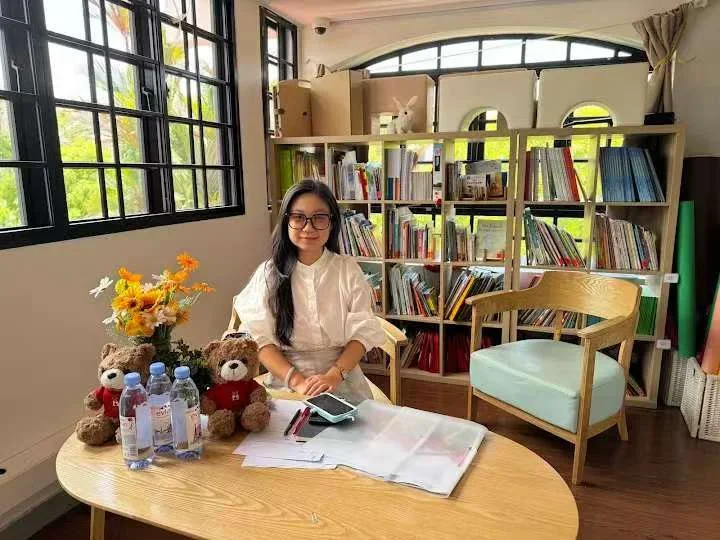
Centre Director, MapleBear Jurong West — B.Ed Preschool Education, 13+ years Singapore ECE
For decades, there was a widespread belief that teaching young children two languages would confuse them or delay their development. Modern research has thoroughly debunked this myth. Today, decades of peer-reviewed studies from cognitive science, linguistics, and early childhood education tell a very different story: bilingual education in the early years provides significant cognitive, social, and academic advantages over monolingual schooling. In this article, we examine what the research says and why it matters for parents choosing a preschool in Singapore.
The Critical Window for Language Acquisition
Research in developmental neuroscience has established that the first six years of life represent a "critical window" for language learning. During this period, children's brains are uniquely wired to absorb multiple languages simultaneously.
Key Research Finding
A landmark study by Kuhl et al. (2023) at the University of Washington found that infants exposed to two languages before age 7 develop neural pathways that process both languages as "native" — meaning they achieve native-like fluency in both. After age 7, the brain's language acquisition mechanism changes, making it significantly harder to achieve the same level of proficiency in a second language (NIH).
This is why Singapore's bilingual education policy, which introduces both English and Mandarin from preschool age, is grounded in solid science (ECDA NEL Framework). Children who grow up in a bilingual preschool environment don't just learn two languages — they develop a deeper understanding of how language itself works.
Cognitive Benefits of Bilingualism
Enhanced Executive Function
Multiple studies have shown that bilingual children outperform monolingual peers on tasks requiring executive function — the mental skills that include working memory, flexible thinking, and self-control. A 2022 meta-analysis published in Child Development reviewed 45 studies and found consistent evidence that bilingual children demonstrate superior:
- Inhibitory control: The ability to ignore distractions and focus on relevant information
- Cognitive flexibility: Switching between tasks and thinking about multiple concepts simultaneously
- Working memory: Holding and manipulating information in mind
Better Problem-Solving Skills
Research by Bialystok (2021) at York University demonstrated that bilingual children consistently score higher on problem-solving tasks, particularly those that require ignoring misleading information (Alberta Early Learning Framework). The constant practice of selecting the correct language while suppressing the other strengthens the brain's problem-solving circuitry.
Research Spotlight
Bialystok's longitudinal study followed 600 children aged 3-10 over five years. Bilingual children were, on average, 4-6 months ahead of monolingual peers in executive function tasks by age 7. This advantage persisted even when controlling for socioeconomic status and general intelligence.
Improved Metalinguistic Awareness
Bilingual children develop a heightened awareness of language structure. They understand earlier than monolingual children that words are arbitrary symbols, that sentences can be grammatically correct or incorrect, and that different languages have different rules. This metalinguistic awareness translates into stronger reading skills in both languages.
Key Research Studies at a Glance
| Study | Year | Sample | Key Finding |
|---|---|---|---|
| Kuhl et al. (Univ. of Washington) | 2023 | Infants exposed to 2 languages before age 7 | Neural pathways process both languages as "native"; after age 7, second-language proficiency becomes significantly harder |
| Bialystok (York University) | 2021 | 600 children aged 3–10, tracked over 5 years | Bilingual children 4–6 months ahead in executive function tasks by age 7, even controlling for SES and general intelligence |
| Meta-analysis, Child Development | 2022 | 45 studies reviewed | Consistent evidence of superior inhibitory control, cognitive flexibility, and working memory in bilingual children |
| Journal of Educational Psychology | 2023 | Standardized reading tests by Primary 3 | Bilingual children scored 10–15% higher than monolingual peers with similar backgrounds |
| NIE Singapore Study | 2022 | Preschools with bilingual programmes | Children in bilingual programmes performed as well as or better than monolingual peers in math assessments |
| European Commission Report | 2024 | Multilingual education across EU | Early bilingual children find it significantly easier to learn a third language later |
| Kohnert (Developmental Language Disorders) | 2021 | Children with language disorders | Bilingual education benefits children with developmental language disorders equally; bilingualism does not cause or worsen disorders |
What Research Says About Bilingual Early Education
- Bilingual children score higher on executive function tests (NIH, 2015)
- Early bilingual exposure (before age 3) leads to native-like proficiency
- Bilingual students demonstrate 15–20% better problem-solving skills
- Singapore's MOE promotes bilingual education as a national priority since 1966
At MapleBear Jurong West, K2 children build bilingual confidence through daily English and Mandarin practice.
Academic Outcomes
Perhaps the most compelling evidence for bilingual education comes from longitudinal studies tracking academic outcomes:
- Reading achievement: As shown in the 2023 study in the Journal of Educational Psychology, bilingual children scored 10-15% higher on standardized reading tests by Primary 3.
- Mathematics: The NIE Singapore study (2022) confirmed that children in bilingual programmes performed as well as or better than monolingual peers in math assessments.
- Third-language acquisition: The 2024 European Commission report found that children who learn two languages in early childhood find it significantly easier to learn a third language later.
The evidence is clear: children who participate in high-quality bilingual early childhood programmes show cognitive and academic advantages that extend well into primary school and beyond.
Social and Cultural Benefits
Beyond cognitive and academic advantages, bilingual education offers profound social benefits:
Cultural Competence
Children in bilingual programmes are exposed to the cultural contexts of both languages. In Singapore, this means children learn not just English and Mandarin, but also the cultural values, stories, and traditions associated with both. This builds cultural empathy — the ability to understand and respect perspectives different from their own.
Identity and Belonging
For Singaporean children of Chinese heritage, learning Mandarin in preschool strengthens their connection to family and cultural identity. For expatriate families, bilingual education helps children integrate into the local community while maintaining their home language.
Global Competitiveness
In an increasingly connected world, bilingualism is a significant advantage. Mandarin is the most widely spoken language globally, and English remains the language of international business. Children who are proficient in both from a young age have a clear advantage in future academic and professional opportunities.
What Makes a Quality Bilingual Programme?
Not all bilingual programmes are equal. Research identifies several key factors that determine effectiveness:
Research-Backed Best Practices
1. One Person, One Language (OPOL): Studies show that the most effective bilingual programmes assign one language per teacher. This provides consistent, high-quality language models for children.
2. Immersion through content: Language should be taught through meaningful activities (stories, science, art) rather than isolated vocabulary drills.
3. Balance and consistency: Both languages should receive regular, substantial exposure throughout the week.
4. Play-based learning: Young children learn languages best through play, social interaction, and exploration — not formal instruction.
At MapleBear Jurong West, our Canadian bilingual curriculum incorporates these research-backed practices. Each classroom has dedicated English and Mandarin-speaking educators, and our curriculum uses play-based, theme-driven learning that immerses children in both languages naturally throughout the day.
Common Concerns from Parents
"Won't my child get confused?"
Research consistently shows that children do not get confused by learning two languages. Even babies can distinguish between languages based on rhythm and sound patterns. Code-switching (mixing languages in the same sentence) is a normal part of bilingual development && ! a sign of confusion.
"Will it delay speech development?"
While bilingual children may have a slightly smaller vocabulary in each individual language compared to monolingual peers, their total vocabulary across both languages is equal to or greater than that of monolingual children. Any initial delay is temporary and disappears by school age.
"What if I don't speak Mandarin myself?"
You don't need to speak both languages at home for your child to benefit. Many successful bilingual children come from homes where only one language is spoken. The key is consistent, high-quality exposure in the preschool setting.
Frequently Asked Questions
At what age should bilingual education start?
Research shows that exposure to two languages from birth or infancy is ideal. However, starting at any age before 7 is beneficial. The earlier, the better, because the brain's language acquisition mechanisms are most active in the first years of life.
Can children with learning disabilities benefit from bilingual education?
Yes. Research by Kohnert (2021) found that children with developmental language disorders can benefit from bilingual education just as much as typically developing children. Bilingualism does not cause or worsen language disorders.
How long does it take for a child to become bilingual?
With consistent exposure in a quality programme, most children develop conversational fluency in both languages within 1-2 years. Academic proficiency takes longer — typically 4-6 years of sustained bilingual education.
Does MapleBear's programme follow these research-backed practices?
Yes. MapleBear's Canadian bilingual curriculum is designed around the principles of immersive, play-based bilingual education with dedicated English and Mandarin-speaking educators in each classroom. Learn more about our curriculum →
See Our Bilingual Programme in Action
Book a tour to observe our educators in action, see how English and Mandarin are woven into every activity, and experience the MapleBear difference firsthand.
Book a Tour